When Less is More!

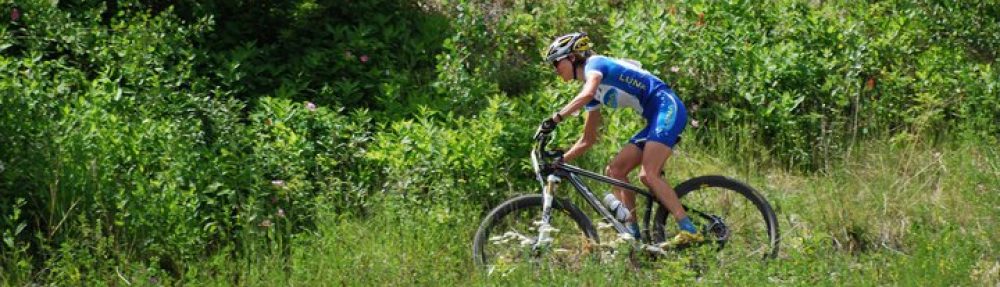
My coach and I finished our second workout of the day today keeled over and sucking wind. At the top of the narly, steep hill in the rain soaked woods Cal exclaimed, “I am VO2 maxed!”. Once we caught our breath and started heading back down the hill, we chatted about how it is that time of the season, now under 3 weeks out from the Xterra World Championship, when it is mainly about high intensity and getting sharp. Hence, the reason I was feeling pukey for the second time in one day, first on the bike and then running! It is the transition time where training takes less time, but the effort is more, maximally more some days!

The race season can be long. With my first race each year being as early at late March and usually finishing up by the end of October, there are many ways I’ve followed the principle of “less is more” in order to arrive at the end of the season at the most important races feeling as fresh (mentally and physically) and fit as I possibly can. Here are the top ways I like to apply the “less is more” motto as an athlete….

1. Its not the end of the world to throw a training day out! This is what my brother Geoff reminded me of every so often when he coached me in my mountain bike racing days while at grad school in Ottawa. Whether it be due to the accumulation of outside stresses, feeling on the edge of getting sick, losing too much sleep as the parent of young babes, or feeling under recovered, throwing a day of training out never hurts once in awhile, and is WAY better than losing up to a week due to being sick!

2. Applying “Less is More” is a personal thing! Learning to respect when less is more for you personally takes some trial and error, good self-awareness developed over time, and trust in the purpose behind the type of training you’re doing (another reason a coach can help you maximize that time!). Unfortunately a number of athletes believe if they just do more than their competitors, and do the maximum amount of training that they can then their “hard” work will pay off. Learning to balance the quality of training versus the quantity at the appropriate time of the year on top of balancing the overall training load with work, school, life, and/or family is a fine art that takes practice, and wisely erring on the side or “less is more” from time to time can be the key to staying healthy and seeing overall improvement.

3. Racing less for more motivation! I’ve definitely had race seasons when I reach the final month or more of racing and I’ve felt like I’m just going through the motions. The drive to compete and push maximally at the end of a long season of racing can be tough if you don’t pace the race season. Figuring out what is optimal for you as far as number of races to enter, and how much time to spend away from home racing can make the difference in ending the season without feeling like your competitive fire has burned out! Pacing the season sometimes means opting of fun local races (since there are SO many in the Calgary-Canmore area!) in order to take real breaks from the emotions of racing.

4. Sleep – less can be more! If there is anything I’ve learned since becoming a parent its that I’m capable of a lot more on less sleep than I ever thought I would be! In my early days with my firstborn, Zoe, I often felt like I’d rather take a nap than get out the door and train. But once I got going, most of the time I would feel great. And the workout would leave me with more energy than I started with! Of course, in line with point number one in this post, once in awhile a nap is more important than completed a training session. I’ve learned not to sweat it when I’ve been up feeding or changing diapers too many times in one night, and because I no longer have control over what time my “child” alarm clock will go off in the morning! 🙂 And as for sleep before races we all know that how much sleep you get the night before a race isn’t nearly as important as the sleep you get two night’s before! And getting up early on race morning can be a good thing to wake up your body!

Embracing Pre-Race Nerves

I’m in Ogden, Utah. The weather is beautiful and sunny, about 25 degrees celsius, and the leaves are turning beautiful colors of red and yellow along one of the most beautiful Xterra race courses. Here is a sample of what the scenery looks like as we wind our way up the trails riding and running…

If I flashback to exactly one year ago, I would say the same things at this point. The only difference was I started vomiting all night before the race, and instead of starting the race at 9:00am with everyone else, I was heading back onto the Interstate northbound to start the long 13 hour road trip home. A big bummer!! So I must say, I am rather excited to be back again, fitter and a heck of a lot healthier condition than a year ago!!

And going into races these days, excited is often the word I use instead of nervous to describe my feelings. Of course, it hasn’t always been so…I’ve had my far share of bundles of pre-race nerves over the years! But maybe now that I’ve been racing for almost 25 years, and that I know every single race is a personal choice, I don’t like wasting any time being nervous in a negative way or dreading the race in any fashion. So here are my reminders to keep races fun, and nerves on the excitement end of the spectrum:

1. Accept any physical signs of nervousness as N-O-R-M-A-L! Everyone is unique as far as nervous symptoms but when I get dry mouth, lose my appetite a bit, get testy with my family, and start taking extra trips to the bathroom, I just go with the flow (excuse the pun!) and remember it is just my body getting ready for “go time”, and let it do its thing! No need to freak out when you start to feel a few butterflies.

2. Keeping investment-return worries in check. Yes, I’ve trained hard, yes I’m hoping to do well, but as I always like to remember and remind others, racing is only about 10% of the time you spent doing your chosen sport. There are just as many victories to be celebrated in the other 90% of the time you spend training, developing relationships and living the lifestyle that goes along with your sport. If you’ve done your best to make it all come together on race day, and can say you gave your best effort and focus at the end of the day then a “result” is icing on the cake!

3. Its your choice to race so you might as well enjoy the experience. What if I said you’re not allowed to race tomorrow? Or you’ll be sick? Or you’ll get injured or in an accident and won’t even be able to attempt your sport for awhile or forever? If you’re lucky enough to be in the position to choose (e.g. fit and healthy to go the distance as a start!) then don’t give yourself any excuse to hold back! Have a few perspective reminders in your back pocket in case excitment tips towards dread from time to time – also normal!

4. Stay focused on the “controllables”. As related to the above, if you’ve done everything in your control to be as prepared as you can for any given race including training, equipment checks, course scouting, strategizing etc within the time you have to do so then you can just enjoy the countdown to race time! And this also means sticking with what you know works for you as far as pre-race routines. I’ve seen and heard too many stories of athletes full of pre-race adrenaline thinking they need to make changes, and suddenly try something new right before a race, not always the best time to experiment – save that for training!

5. Finally, at the end of the day it is just a race! If you put all your self-esteem eggs into your racing basket then your life might be an emotional roller coaster! If not, you can give it your all and no matter how it goes, you can have lots more to look forward to when its all said and done. When I remember to smile during races it is because it takes way less muscles, helps relax the rest of my body and is because I’m looking forward to unconditional love at the finish line from my favourite little fans 🙂 Nico is with me at this race, but I’ll look forward to getting home to see “Princess Zoe” on Sunday….

Zoe, wearing her new Minnie dress, every day this week and counting since receiving it on her recent 4th birthday!!

Finding Flow with a Family

I’ve always loved the term flow, as opposed to its other synonmyms such as “in the zone”, fully focused or peak performance. In sport, or any other context in life, flow can be described at the times you feel completely absorbed in what you’re doing and totally in the moment (For a great book on it check out Flow in Sports). As an athlete, you may experience those rare training or racing days where time seems to slow down, your efforts feel effortless, and you feel in total control of what you’re doing. It is often the moments where the challenge is optimally matched with your skill level.

I think of mountain biking as a great example to illustrate flow in sport. If you are riding trails that are way beyond your ability level, you’ll end up walking more than riding, while likely throwing out many choice words in frustration. If you ride trails that are too easy, you could end up bored with nothing to challenge you. On the other hand, if you’re riding trails that are the optimal challenge to your present physical and technical abilities you’ll be fully alert and focused on what you’re doing, loving the thrill, and whooping with excitement!

Through working with many different athletes and from personal experience, it seems that our ability to find that challenge-skills balance in life in general can relate to our ability to experience flow in sport performance. Experiencing flow generally happens right in the middle of the continuum between boredom and stress or feeling overloaded. And for everyone that balance is completely individual. Some athletes perform optimally when they can focus 100% on their sport, and taking on any other commitments sends them into the stress zone. Others feel more focused when they are pursuing other goals such as school and work (and I could add for some of us raising a family!) at the same time. Everyone has to find the balance that works best for them, and it can be an evolving pursuit.

School is back in this week, and with all the nostalgic feelings of going back to school comes renewed enthusiasm to start new projects, study something new, sign up for classes, and buy new clothes! There are so many things we could do!!!  Just as we as athletes strive to find flow more consistently in sport performances by balancing all the demands optimally, we can also practice some of the same principles as we parent and figure out how to balance a family by remembering things like…

1. “Over-reaching” from time to time is okay. Over-reaching is the type of fatigue an athlete may feel after a hard training block or competition, and is readily reversible after a few days. Some weeks of training or life in general are crazy. We can get through them if we can see a rest time to look forward to at the end to reset the balance.

2. The art of saying “No.” It is unbelievable how many activities I could sign myself or my kids up for these days! Between lessons, birthday parties, work commitments, training schedules, social invites, and day to day life it is easy to feel overloaded. I’ve had to work hard at saying “no” especially to fun things that I know will impact too much on my recovery as an athlete, my ability to be fully present at work, or on family time.

3. Prioritize what is important. Whether you’re a stay-at-home mom or a full time career mom, or somewhere in between, it takes just as much work to prioritize what is important for you and your family. Experiencing flow in life means being true to your values regarding career choices, family choices, and lifestyle choices! As moms, it is easy to get caught up in the so called “mommy wars” but the most important thing is striking the right balance between our needs and wants and time spent with our kids. If we are true to that balance we’ll likely be a better, more present, and hopefully patient mom to our children!

Finally, flow reminds me of the image of a river. A river keeps flowing smoothly. When it runs into obstacles like rocks or logs, it doesn’t resist them, it just reroutes and finds the best way around them. Those obstacles may be the days or moments we feel temporarily overwhelmed, but with proper time outs to unplug, to breathe, and to relax, we can get flowing again with our balance restored.

Motherhood motivation to keep moving!

My most recent running interval session was hard 800m repeats with very little rest. Often during such tough workouts, I say to myself at least once, why am I still putting myself through training that hurts so much?! Then I remind myself to refocus and just get through it one interval at a time. I also think about how satisfying the nice leisurely paced cool down jog will be if I hit all my pace times or even better! When I have temporary moments of self-doubt about why I continue to train and race or on the days when others make me feel like an oddball and say, ‘when are you going to slow down?!’, I remind myself of all the reasons that keep me pushing the pace….

1. Life is too short! When I was twenty it felt like I had an eternity of years ahead of me to train and compete. As the years roll by faster and faster, especially since my children have come along, I take being healthy, injury-free and simply having the time and support to get out and train and enter races less and less for granted. I do it because I can! And I will continue to keep fitness a priority at some level as long as my body allows me too!

2. I really do love it (most of the time!) After 25 years of year round training and competing I can admit how much I truly enjoy the athletic lifestyle! With the odd time off from injury and breaks from hard training during pregnancy, I’ve realized that I do enjoy pushing hard and testing myself in competitive races! For me personally, just going easy all the time can’t compete with the endorphin-high following a hard training session or race! Also, nothing compares to those moments of total absorption I experience while riding sweet single track on a mountain bike, during a run that feels effortless, or a swim where I feel like everything clicks!

3. I like doing something that scares me at least once per week! Training and regularly pushing my mental and physical limits is thrilling and makes me feel more alive! Coach Cal regularly throws workouts at me that make me wonder how I’m going to get through them. I may fear the intensity level or the length of the workout, but once I break it down and get through them it feels amazing and they are always money in the confidence bank! The same goes for things like riding a scary technical trail on my mountain bike, open water swimming in new conditions, entering a new race, conquering a new race distance, or getting in shape again after a baby. Every new barrier that is pushed is a motivational growth-spurt! So just go for it, what is the worst that can happen?!

4. The social bonds of sweating together! Some of my best friendships have developed through running, cycling, and now “triathloning” together with others. There is something about running, cycling, skiing, or racing along side others that forges bonds of friendship quickly! As a busy mom, it also kills two birds with one stone – socializing and working out at the same time! While at least half of my training is done solo if I didn’t have at least a few social training sessions per week my motivation would drop pretty quickly!

5. The satisfaction of setting and meeting goals! Improving is always fun! Even though my speed and endurance will eventually diminish over time, I still get excited by working on improving my swim technique, technical skills on my bike, flexibility for running, and ways to train, eat, and recover better. I’m lucky to have a coach that is creative and keeps training fun with lots of variety and new ideas. For those of us that compete, time spent racing is only a small percentage of our time spent in any given sport. Enjoying the daily training performance victories are just as important as meeting race day goals for long term motivation!

6. Role modeling an active lifestyle to my kids. Being a role model is a bonus motivation for me to stay active. My husband and I want to be able to be active alongside our kids in whatever activities they enjoy growing up. I also admire my parents physical fitness levels now in their mid-sixties, an age where taking care of yourself over time really starts to pay big dividends! I love the fact that I can still go for a mountain bike ride with my dad now, and he really doesn’t slow me down much at all! All my favorite coaches have been people who compete themselves, have trained with their athletes and so have motivated me through their role modeling.

Practicing Mommy Mindfulness

On a very busy day with kids everywhere at a downtown park the other day my “mommy GPS brain”, now apparently strengthened with improved wiring for sight, sound, and movement felt overloaded. I was trying to keep up with Nico, the escape artist, who likes to run off in any direction as fast as he can, and only laughs and runs away faster and farther when I call his name. The ever more sociable Zoe happily goes off and plays with whoever she can find at the park. Finally, I was also trying to keep an eye on our parked stroller and bags off in another direction.

The playground experience reminded me how tracking our children constantly is just one more skill women naturally aquire for our constantly multitasking brains! And perhaps the best way to prevent ourselves from experiencing multitasking meltdowns is to take time to practice mindfulness and turn perceived chaos into calm. I like the definition of mindfulness by John Kabat-Zinn, a famous teacher of mindfulness meditation and the founder of the Mindfulness-Based Stress Reduction program at the University of Massachusetts Medical Center:

“Mindfulness means paying attention in a particular way; On purpose, in the present moment, and
nonjudgmentally.”

I have tried to put the art of “keeping my consciousness alive to the present reality” (Thich Nhat Hanh) into practice not only in day to day tasks but also while training or competing. Here are some examples…

1. Mindfulness while exercising. For me, working on being mindful of what I’m doing comes most easily while training. With workouts planned and a coach to help set the training goals, the purpose behind each training session is already in place. Then I work on having something to focus on for each part of my workout with no more than one or two things at a time.  For example in the pool depending on the part of the workout I may be focusing on my stroke technique, my stroke turnover, or just going all out and not worrying about technique at all. Running intervals are still some of my toughest training sessions to get through. I might focus on staying relaxed, breathing deep, or turning my legs over fast, and just take it one interval distance at a time! While the high intensity and high quality workouts often take very specific and high mental focus to get through, I also try to be mindful of completely enjoying the easier workouts when I can just go with the flow. For example, on long easy runs or rides, I enjoying just go the pace my body wants to go without paying too much attention to gadget information like heart rate, pace, cadence, or watts.

2. Mindfulness with day-to-day work or tasks. About a year ago, I took a two-day workshop on meditation with a team I work with. We worked on breathing, sitting, staying in the moment, and just observing our thoughts and physical sensations without judgement for three hours each session. It was tough and very difficult not to let my mind wander to thinking about what I was going to do later or other distracting thoughts. Just like training your muscles for endurance or strength over weeks and months of physcial training, taking time to be mindful for even one hour, let alone 5 minutes, during a day takes practice! Some simple examples are eating a meal slowly and savoring every bite, being completely present in a conversation and really listening to what someone is saying to you, or just washing the dishes with complete awareness of washing the dishes.

3. Mindfulness with your children. In the age of constant communication it is hard not to become a “crackberry mom”, you know the moms who are constantly on their phone or blackberry while at the park, in the mall etc. I see them everywhere and the only reason I haven’t be prone to it is that my phone is so old school that I don’t even have a keyboard and hate texting….for now! I think as mothers these days we need to be displicined enough to realize that every e-mail, phone call, or text message does not need to be answered immediately. We don’t have to be available to the outside world 24-7. Often when I’m with my kids, especially in the house, I can get distracted by wanting to get a million things done. But I strive to be organized enough that when I have time to just hang out with my kids I can be fully present to read a story, get down on the ground and just play, or just go to a park and be fully engaged in having fun with them!

Emotional toughness training?

You never know what each morning will bring! Although most of the time Zoe acts like the “big sister” she is, this morning was one of her regressions into “I want mommy!” (as she’s clinging to me and can’t possibly get any more plastered onto me), “Carry me!” (no, you’re a big girl and are perfectly capable of walking downstairs by yourself), “I’m too tired, waaaaaah, collapsing on the floor full out crying” (well, you’ll have to stay upstairs then and come down when you’re ready to be calm). After about an hour of whining, crying, snivelling and being carried back upstairs a few times by me she was downstairs as calm as could be happily eating her breakfast, and chatting like nothing had happened!

Meanwhile, I’m working hard at staying cool and calm myself as mornings like this put my goal of consistent parenting performance in the emotional control department to the test. As Zoe’s emotions fly out of control now and then as they naturally should at her age, it made me realize that I’ve actually honed my emotional management skills a little over the years too. As I’m always connecting dots between work, racing, and motherhood in many of these posts, I’ve realized that bringing out your best emotional toughness is great for racing, and your best emotional softness is best for parenting but they both take the same kind of work. Vicarious observation, personal experience, and parenting have taught me that…

1. If you feel the need to shed some tears let it go as fast as a terrible two forgets about a tantrum! I remember when Zoe first started the lovely tantrum stage sometime around two years old, I used to feel myself tense up and feel pretty stressed until she finally calmed down. It took some work, and still does not to just snap sometimes, but with some practice and strategies in place I’ve become a lot better and staying calm, physically, emotionally, and verbally. Just because she is spewing emotions, doesn’t mean I have to too! Sometimes I would find myself staying angry at her behavior after it was all finished. But just as she lets it go faster than you can blink, I’ve tried to practice doing the same.

Zoe at 2 years

2. Managing the emotional highs and lows of racing avoids burnout! In sport, the practice of letting go quickly is just as important. I learned this really well in my work with short track speed skating. They often race two distances in one day with 3-4 rounds per distance. If they spend too much emotion either being overly excited or disappointed after each race, they will end up twice as fatigued by the end of day, and then they have to do the same thing all over again the next day! There is a reason the best athletes in any sport don’t get overly excited after a victory and don’t get overly down after a sub-par performance. Top athletes often have to race back to back in one day, over a weekend or weekly depending on the sport. Good emotional management and perspective is key to pacing the season and avoiding sheer exhaustion by the end.

3. Sometimes it is wisest to save emotions for future spending! With all the above said, it doesn’t mean that emotions need to be suppressed or bottled up. But if we give them free rein at inappropriate times, things can backfire when it comes to performance. Think of yourself or an athlete with a lot of nervous energy in the week or two before an important competition. You can sit around twitching, worrying, and spending nervous energy over a performance that is out of your control because it is X days away, or you can use any passing twinges of pre-race anxiety to remind you to refocus on the present, and save those emotions for race day! Other examples are athletes who give in to emotions too soon and start to celebrate before the race is over, give up before the race is over, or spend unnecessary emotional energy getting angry at other competitors, race officials or competition circumstances before it is over (think John McEnroe in tennis). The ability to save the processing of strong emotions until its all said and done is also a piece of the pie in haivng your best competition.

4. When strong emotions come up we can CHOOSE our reaction! Finally, while it is okay and developmentally normal for children and babies, especially under the age of three, to let emotions rule their behavior, as adults hopefully most of us have realized and learned that we can be in the driver’s seat! As a parent, we can choose to stay calm and cool through tantrums and sibling squabbles. As athletes, we can choose the most productive responses to our own mistakes, competition conditions and circumstances, hard to get along with teammates or competitors, or bad calls. If it sometimes appears that a top athlete is acting like they “don’t care” under high stakes circumstances, it may well be that they are just well practiced, wise, and calculating in how they manage and fuel their emotions in order to perform their best!