Athlete-Mom Interview: Sara Gross

Many thanks to Sara Gross for being my first athlete-mom interview of 2012! I caught up with her for the first time this past year at the Calgary 70.3 in July where she finished 2nd just 7 months after giving birth to her daughter, Rosalee. After competing in Ironman Canada at the end of August and finishing 4th in a time of 9:46, Sara took the racing challenge up another notch a few months later when she went on to do two back to back Ironmans (yes that’s one week apart)!! In November Sara competed in Ironman Arizona and finished 8th in the Pro Division while running to a marathon PB (3:07) in a total time of 9:18. A week later, she competed in Ironman Cozumel and did not slow down much at all, while finishing 6th place in an impressive overall time of 9:56!

Sara also has a PhD in Ancient History and Religion from the University of Edinburgh. She works as a coach while living in Victoria, B.C. with her daughter, Rosalee and husband and personal coach, Clint. For more info on her coaching click here. You can also follow her on her personal website: www.saragross.ca. In the meantime read on about Sara’s transition into motherhood racing….

Top of the podium post-partum at Subaru Victoria Half-Ironman!

1. Can you tell me a little about your athletic/competitive background before becoming a mom?

Before my daughter was born, I had been a professional triathlete for 6 years. In that time I had collected 13 top 5 Ironman finishes and was ITU European Long Course Champion in 2005

2. What has motivated you to keep setting athletic and/or competitive goals since becoming a mother? Is it different than pre-children?

The thing that motivates me most is that I have not reached my potential in the sport. Finishing in the top 5 all those times and not winning an Ironman is frustrating and keeps me pushing forward. Though many things have changed since Rosalee was born, this central motivation has remained the same.

3. How do you balance training and/or racing with your family (and work?)?

The main thing that keeps me balanced is the amount of support I have. My husband (and coach) Clint understands that if I am going to compete against the best in the world we have to prioritize my training. My mental coach Bob (from Sportexcel) taught me how important it is to move easily from one role to another on a daily basis. So when I get home from training I quickly shift from athlete-mode to mom-mode, likewise when I am coaching I shift to coach-mode. Its amazing how much easier my life is if I don’t carry the baggage of a bad training session into the rest of my day. I also don’t have much time to stop and think about how I am feeling. If I am tired, I often don’t notice until I hit the pillow at night.

4. Did you train during your pregnancy? What was your approach?

I would not consider what I did during my pregnancy “training”, but I did exercise. I averaged about 1-1.5h/ day for most of the pregnancy, just easy swimming, biking and running. I ran up to an hour until week 32 and stopped because I could feel my baby’s head pushing down on my pelvis and it was just weird. I biked (mostly on the trainer) until week 37 and swam up until the day before she was born. I was anaemic during the middle part of my pregnancy, so I felt too fatigued to do any more than this. My main goal was just to keep myself sane. I had no illusions about maintaining my fitness. When I started training again after birth, I really was starting from scratch.

5. What were the biggest challenges getting back into shape after your daughter was born?

One of the biggest challenges for me was not being able to plan my days, weeks and months the way I had previously. My time was no longer my own. I had to get used to training on a whim. For example, if Rosalee fell asleep, I would get changed and jump on the trainer. Or if she had a bad night, I might need a nap instead. I found that if I kept my priorities straight in those first few months I could get in a decent amount of training, even if I couldn’t plan out the details like I used to.

Running to second place in the Calgary 70.3

6. Any advice you would give to other moms trying to stay active (or even competitive) while balancing life as a mom?

My best advice for new moms is to let go of any guilt associated with spending time away from your child. Finding people to take care of Rosalee who love her as much as I do was good for me and for her. I think that all women should get in the habit of taking care of themselves for at least an hour or two a day. Its good for our sense of well-being and is also a good example for our kids as they get older.

7. What are some of your race goals for 2012?

I have always wanted to have a great race in Hawaii (Ironman World Championships). In 2008 I finished 20th there having cramped up on the bike. The new qualifying system for pros means I have to race to earn points to get on the startlist, so that’s what I am doing this year. And of course, I am always looking for that elusive Ironman win!

Twelve photos for 2011

Like most of us these days, I have hundreds of photos uploaded to my computer and they are completely unorganized. I’ve been meaning to print them or make more Shutterfly albums but such projects always get pushed down the priority list! In the meantime the files keep piling up.

So I decided to give myself a little end of year challenge, to choose just one favourite photo from each month of the past year. The challenge was also to do this rather quickly and not waste too time choosing, the other drawback of the digital photo age – too many good ones to choose from! Well, maybe not THAT many, I’m not a very good photographer and not so good at remembering to bring the camera and take any pics. Like most proud parents, the majority of my photo taking involves my kids. Since I put a lot of action/race pics in my race reports, I tried to choose other pics that highlighted each month for me. Anyway, here they are and the reason why I chose each one….

January. Zoe discovered ballet and loved taking her first ballet class, many hours were spent twirling and practicing at home too!

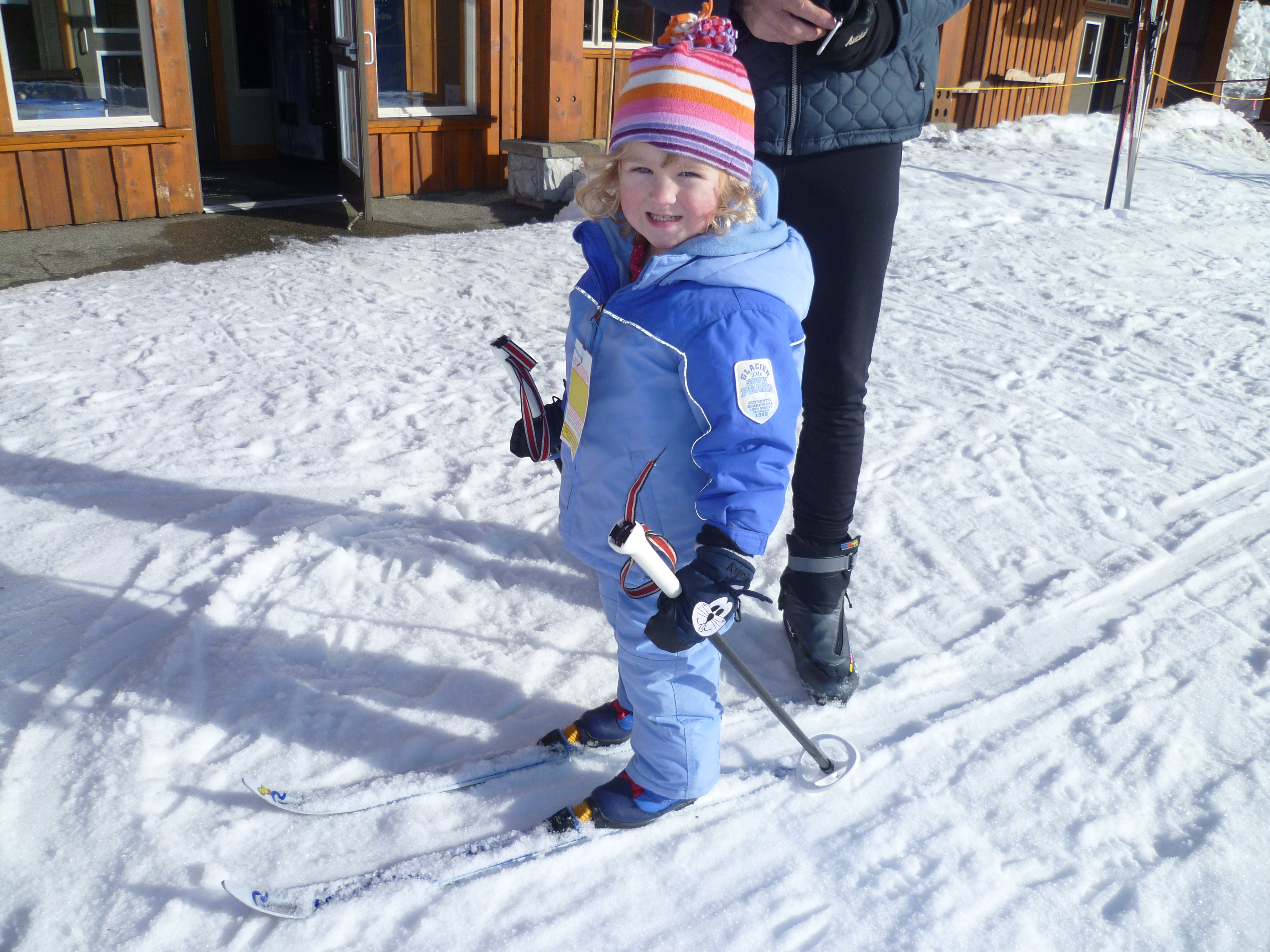
February. Ever since my kids have come along we’ve gone back to Courtenay and Mt Washington to my parents at least once per winter,  where the xc skiing up the mountain is as fantastic as the mountain bike riding down below. This past winter Zoe enjoyed getting in some skiing and snowshoeing too! 

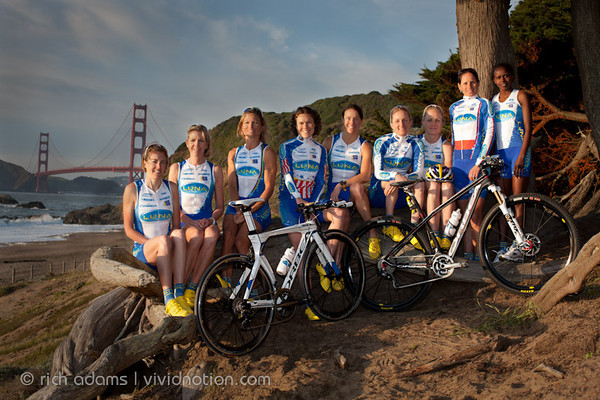
March. Since 2008 I’ve been lucky enough to be a member of the LUNA Pro team and every March is the real Christmas for me – team camp and photos, with new bikes and gear for the season. Here is one of my favourite team photos from that week with the Golden Gate bridge in the background.

April. Grand-mama comes out from Montreal for at least a fortnight’s visit every 4-6 months. Lots of happy play times for the kids, as she usually comes out when we are super busy and need the extra help!

May. This was my first experience at the wonderful Wildflower triathlon. I love the photo because it epitomizes  my fun but challenging balance between racing and kids as I’m putting on my wetsuit with less than 20 minutes until go time!

June. Fond memories of a family vacation that didn’t involve a race – very rare these days! It was out to my husband’s neck of the woods – Montreal. J-F is relaxing as much as is possible between black fly attacks in the Quebec countryside at his aunt and uncle’s house in beautiful St-Anne-des-Lacs

July. A fun month at home highlighted by a visit from Uncle Geoff and a day at the Calgary Stampede during which Zoe enjoyed several amusement rides with her uncle.

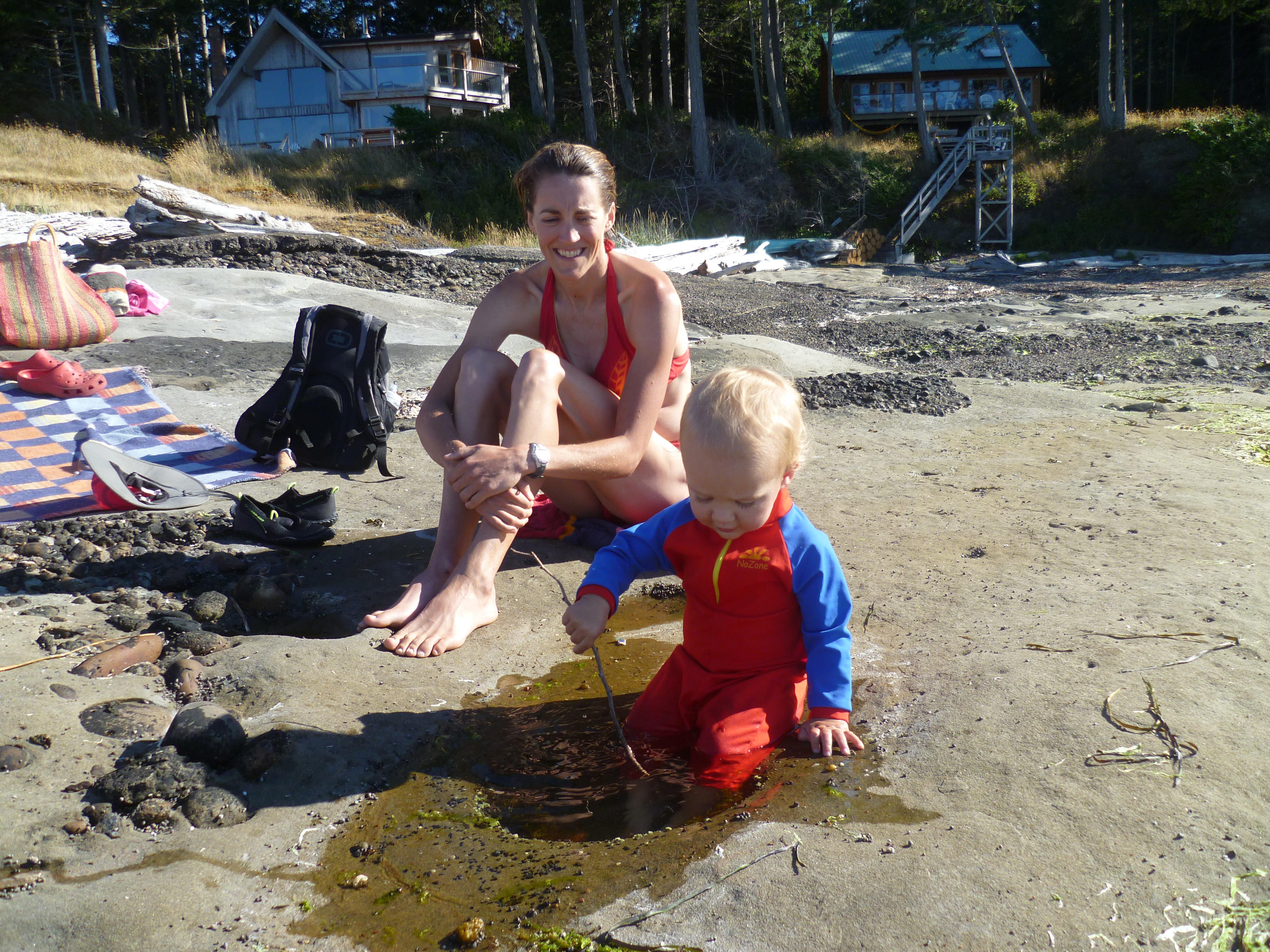
August. On my must do every year list – a summer trip out to our family cabin on Hornby Island on the west coast. Fun to enjoy sunning on the warm sandstone rocks and watch Nico play in the same tidal pool my brother and I also enjoyed at his age!

September. Zoe turned four and was enjoying hamming it up to the camera and goofing off with her brother on a perfect fall day. She is wearing the very cool eclectic clothing sent to her from her Aunt Keri.

October. There was no one cuter than my one year old chicken clucking around amongst the trick or treaters on Halloween!

November. Nothing much usually happens in November but this year I extended the race season with an extra long race and this photo sums up how good it felt to finish the added endurance race challenge!

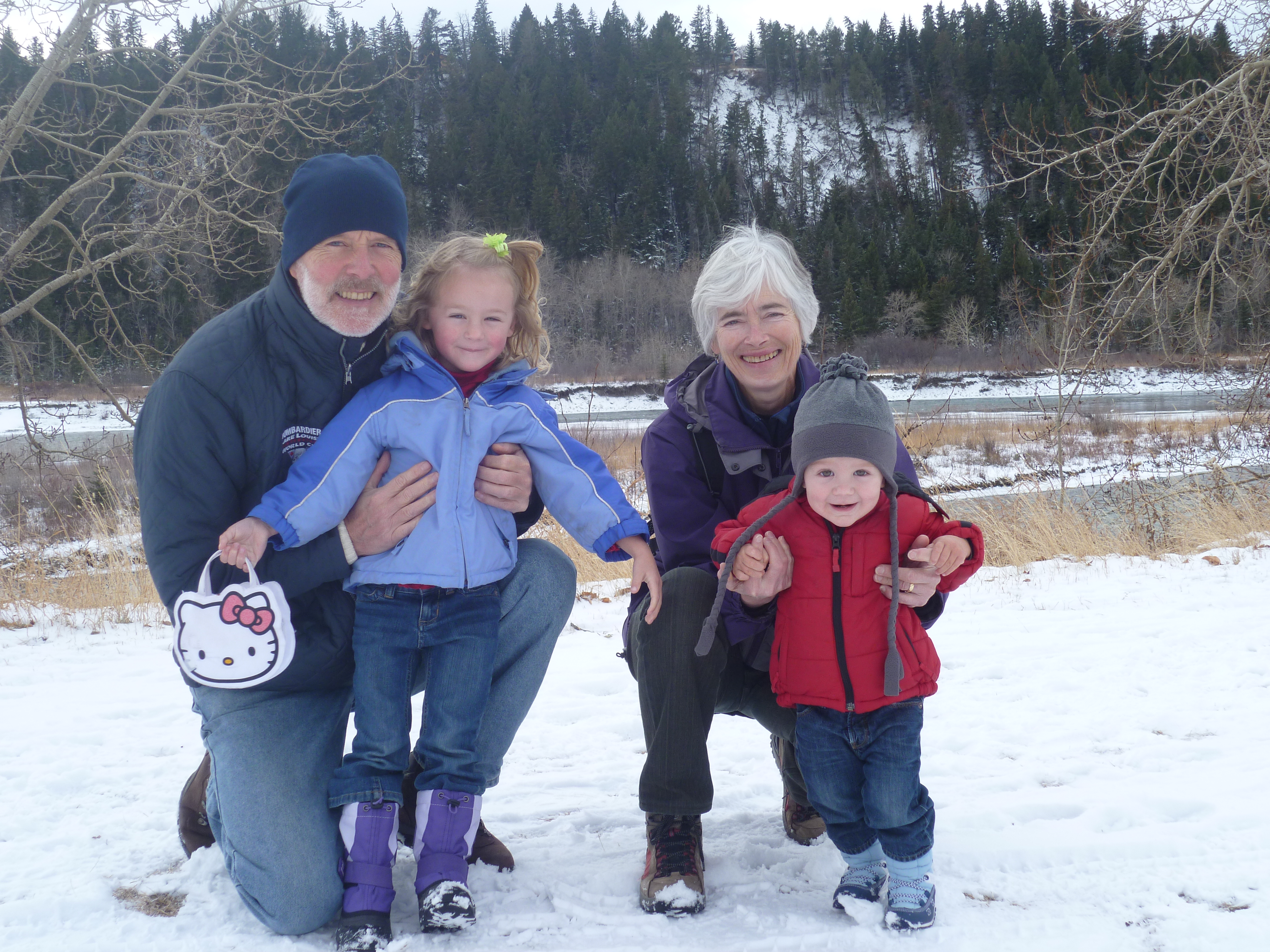
December. December with house moving craziness. My parents came out to help and celebrate an early Christmas with the kids. This is one of my favourite pictures of them with the kids!

Implementing Core Intentions

Well, if there is one thing you learn after childbirth, when you get exercising again, it is how much you use all those small core muscles to stabilize everything! After both kids were born, when I first started running again it felt like I was running with a jelly belly! It took at least six months each time until I felt everything was holding together solidly again when running, especially during speed work! And if you’re not strong from the core, it can lead to a bodily chain reaction of nagging pains or injuries in other areas. I came back quicker than ever after having my son and suffered some achilles problems for a bit as a consequence of a weakened core.

Every season, I have intentions of doing more core work as it is the foundation to having proper technique, strength, power and stamina in any sport. I realized this importance while mountain biking in the early months after having Nico as well, my back was often sore as it was doing all the work to stabilize me on the bike!

While I had a good start to regular core work as I began my winter training recently, as I write this I have fallen off the core wagon again! Unless I count all the box lifting I’ve done while moving houses the past week – and that’s my time excuse too, ha! My goal is to do regular core work 2-3 times per week for a minimum of 15 minutes. It doesn’t sound like much and as important as I recognize it to be, when the business of life and training sets in, and when I’m healthy and taking being injury-free for granted, core work is unfortunately the first thing to get dropped from my schedule. Oh, did I say schedule? Part of getting it done would be to put it in my schedule to start with! I’ve always liked the ring of “implementation intentions” an academic term related to the research of effective goal setting that means going beyond having the goal (or intention) to do something and planning the steps for how you will implement it – to consider where you will do it, how you will do it, when you will do it, with whom you will do it etc.

For now, I will focus on the how. Here are some of my favourite ways to work on core strength with enough variety to keep it interesting from week to week…

1. Swiss Ball Exercises. Coach (brother) Geoff put me on this program when I first started mountain biking. I do 10-20 repetitions of sit ups, right and left side sit ups (is this the right term?), back extensions, hamstring curls, and ball roll ups (from plank position with hands on the floor bring your knees up into your chest with the ball under the top of your feet) continuously rotating through each exercise for 10-15 minutes. Or build up to 45 minutes for a real trunk stamina challenge!

2. P90X. I’ve never been a huge fan of exercise DVD’s but my dad got into P90X and introduced it to me in the summer. The guy (Tony) is motivating and not annoying to listen to. Every exercise has a countdown timer too. My two favourites are Ab Ripper X, a solid and tough 15 minute core routine or if you have more time, the core synergistics workout is a good one that involves more dynamic and functional work with light weights and bands.

3. The Timer Mix. I set my watch to beep every minute and just rotate through any core exercises I can think for 10-15 minutes or more. Using a combination of ab work, planks, push-ups, side leg lifts, arm and leg work with resistance bands, the time goes by amazingly fast.

4. Yoga. In the past I’ve attended instructed classes, but since kids any “luxury time” to do yoga is usually with a DVD at home. On of my favourites is Baron Baptiste’s beginner Yoga workout. Unlike many yoga workouts that take well over an hour, this one takes 40 minutes and includes all the essential poses with a good core workout to finish it off. I love yoga for all the other things you can work on at the same time as well such as relaxation, breathing, mindfulness, and flexibility

5. Pilates. Not one of my faves because I’ve yet to try it but I must add it to the list as I’ve heard this is a great workout for core strength!

What are the best gifts for a young athlete?

Mom, is this day Christmas yet? Mom, can you add Applejack (or the name of another My Little Pony – how many are there anyway?!) to my list for Santa? Mom, does Santa know we’ll be in Montreal for Christmas so he will bring the presents to the right place? Zoe is only 4 but I’ve realized the time has come as parents to seriously go to battle on the war on toys!

I was in Toys R Us the other day and was completely overwhelmed by the number and selection of Christmas present possibilities. With our goal to keep the present number down this year for the kids, I made a few select purchases and got out of there before anything else could entice me to buy it! Once you have kids, it is easy to want to indulge them with things you didn’t have growing up, with things that remind you of your childhood, or because you want them to have it all and have every opportunity there is out there….but can wanting to, and subsequently acting on the desire to give them everything be a bad thing or have potential negative consequences?

How much to give to a young athlete is also a conversation I had with a friend while snowshoeing the other day. Can too many “gifts” or “support” in the form of training and competition opportunities and equipment etc ever backfire for the young developing athlete? Many parents face these dilemmas…here are my two cents worth from personal experience and my background in the science of motivation….

1. Go easy on the external motivators! Contrary to popular belief, rewarding athletes for performance will undermine their intrinsic motivation, motives of fun, satisfaction, and doing activities simply for the pleasure of doing them! I had a friend who told me that while growing up her mom bought her gifts every time she had a good race result. She admitted that it wasn’t the best thing and that she never really enjoyed her sport. The only reason she continued it through college was due to a scholarship. The nature of competitive sports is already full of plenty of extrinsic motivators, awards, medals, prize money, glory, recognition, or making a team. The best “carrots” parents can give their children is encouragement to follow their interests.

2. Avoid gifts that may increase guilt-related motivation. I worked with one athlete who stated he felt he needed to perform because he had all the best and most expensive equipment bought for him by his parents. There is a time and place to worry about having the best equipment such as when athletes reach the level of earning some sponsorship, or are at the very top level where physical abilities are much tighter. Giving athletes equipment and opportunities too early, such as before they’ve learned the value of hard work, persistence, and commitment to goals, can undermine motivation, and lead to the false belief that the best equipment, coach, training camp, team etc can buy performance.  Lance was right about one thing – “It’s not about the bike!”

3. Be the best parent, not another coach! Although with good intentions, I’ve witnessed many parents being overly involved and anxious with their children’s athletic involvement and performances. Aggressive screaming from the sidelines, overanalysing and breaking down a child’s performance in front of them, or always asking “Did you win?!” are not the productive ways to encourage healthy involvement in sport. If a parent consciously or even subconsciously treats a child differently depending on performance and results, the message will be clear – I have to perform for your approval and love. Instead, showing interest with open-ended questions that focus on the process – “How did it go?”, “What went well today?”, or “What did you enjoy most/least about your experience today?” are more supportive without judgment.

4. Gifts of exposure, choice, and responsibility. There are so many sports and activities a young child can be involved in these days, and often we hear talk of over scheduling children to the point of lacking any time for good old-fashioned free play. While every family has to figure out that balance – giving children the choice to try different activities is a great start. Great athletes develop from the perfect blend of nurture, parents showing and providing opportunities to experience various sports, and nature, the child developing an interest to pursue something. Motivation and interest continue to flourish when a child feels autonomous in what they are doing. In other words, participating in something that is their own choice. At certain ages, children can choose the activities they enjoy and/or they can choose the level of commitment. In relation to point number two, at an older age they can also learn responsibility and ownership by saving money to help pay for various expenses in their sport. For example, one mom I know had a teenage son who wanted a really expensive mountain bike. She made him the deal that if he saved for half of the amount, she would pay the other half.

5. Your personal time and genuine interest. As an adult looking back at my childhood involvement in soccer, running, basketball, and volleyball, I think the greatest gift my parents ever gave me was their genuine interest in what I was doing. They took the time to understand every sport and understood the meaning of a bad or a good workout/competition result. They also spent time as spectators, chaperoning and participating alongside us – I have fond memories of weekend family runs and cross-country ski days up the mountain.

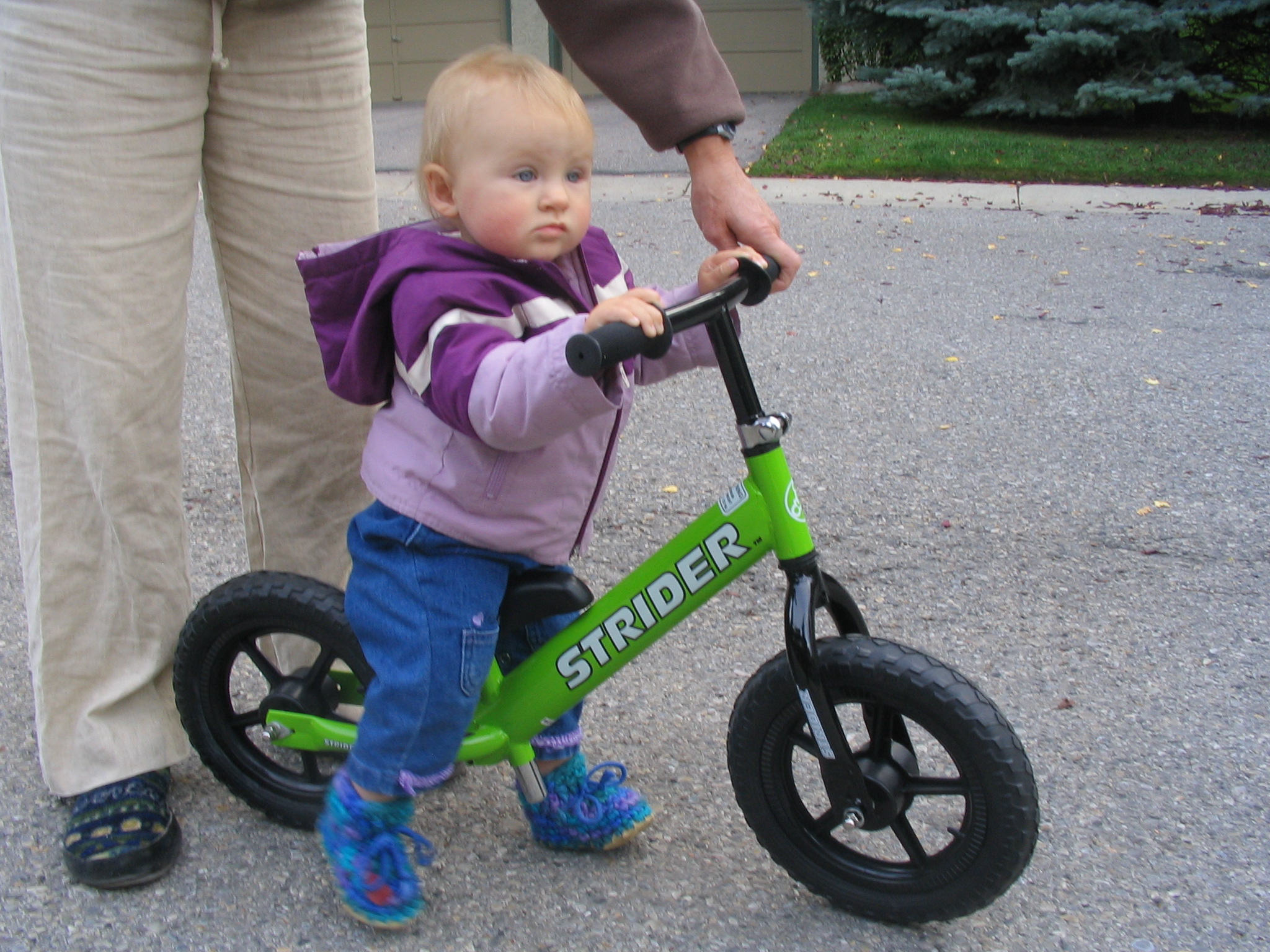
Zoe's first bike on her 1st birthday, which she preferred to drop and run away from! Nico is showing more interest in it!!

Hello Trainer! How can we get along this winter?!

On the first super cold, not really worth going outside day in Calgary the other day, I hopped on my trainer for my first ride heading into winter training. With no real

A garage ride my first year on the LUNA team, Photo by Mike Flynn

structured training plan in place yet, I had enough motivation to ride for about 45 minutes. Enough time to think about the fact it was only the beginning of the 4-5 month indoor riding season, sigh! For those of us triathletes and cyclists who live in the more northern latitudes and parts of the world where sub-zero temperatures, ice and snow are the norm for the winter months, riding with a trainer, rollers, or on a spin bike are usually the only options to giving cycling specific muscles a workout. Ever since I have called myself a cyclist or triathlete I have lived in the land of snow and ice, far from balmy Vancouver Island where I grew up and one can ride outdoors year round!

Over the last ten years, I have also experimented through trial and error as to how much and what kind of indoor riding works best in order to make it to spring still physically fresh and not mentally burned out! Here are a few things I’ve learned to do in order to keep pedaling nowhere as exciting as possible…

1. Learn and respect your indoor riding threshold! During my first winter training for mountain bike racing I was living in Ottawa and rode my rollers in the dingy basement of a rental house I was sharing with other students. Midway through the winter I found myself burnt out of indoor riding and had to take a little time off to refresh my physical and mental motivation to ride inside again. Although I’ve known a few mentally tough (or crazy?! :)) athletes over the years who seem to actually enjoy and/or can tolerate many hours per week of indoor riding, it’s best to respect how many hours per week you can personally handle mentally in order to optimize your time on the trainer and pace yourself until the snow finally melts!

2. Use every motivational tool you can. If you’ll be riding the trainer for several weeks or months at a time, it can be worth getting a lactate test done with a coach to find out your training zones with heart rate and watts. That way you can gauge your efforts, and monitor whether you’re overdoing it as well. While riding nowhere, rides that focus on your heart rate, cadence, and wattage can be welcome “distractions” to pass the time productively. Add in your favourite motivational music mixes and you’re ready to go!

3. Have a detailed ride plan. When I ride at home solo, a 90 minute plus trainer ride takes a lot less mental energy when I have a detailed down to the minute plan to follow. I’ll use one of my workouts after teaching spin classes for many years, or get one from my coach. With a variety of efforts (heart rate or watts), cadence, standing, sitting, and one-legged exercises to all taped to the wall beside me, the time goes by much faster with a quality, focused plan to follow.

4. Choose TV/movie watching or radio listening wisely. Some rides are meant to be just steady aerobic rides, and these ones can be the best ones to choose to watch a movie or TV or listen to the radio instead of rocking out to motivational tunes. I also like to spend time on my rollers instead of the trainer for these types of rides which also helps improve balance and pedalling coordination, as well as being closer to simulating outdoor riding. However, I usually don’t choose to watch TV during intervals since I associate it with relaxing and chilling out and I think my legs subconsciously start to pedal slower when I watch it – one exception would be watching Tour de France type footage where you can focus on matching the pedaling cadence. When first learning French I also learned that listening to French radio while riding to work on my comprehension skills only made me fatigue even faster while indoor riding because of the brain power depletion it took to focus!

5. Train with a group as often as possible. There is always more energy and motivation in numbers! If you can join or even teach a spin class for a ride or two a week, it keeps you accountable to keep riding and is a good change of scenery from riding at home. Group movie rides in a friend’s garage or basement are great. In Calgary, our Critical Speed triathlon training group does famous bimonthly 3-5 hour indoor brick sessions (a mix of riding, track running, stairs, and core conditioning) during the winter, which I could NEVER do on my own!

6. Cross-train! As related to point number one, when your indoor riding threshold is maxed out, cross-country skate skiing is my favourite method of cross-training. Even one day per week, things like snowshoeing, stair running, or even stairmaster and uphill treadmill running if you’re still stuck inside can be a nice change to the trainer while also still working on cycling specific muscles and strength.

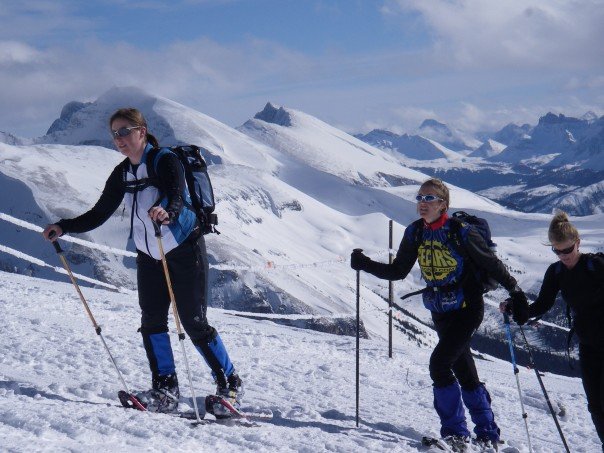
A gorgeous, mostly vertical, snowshoe day up Sunshine in Banff

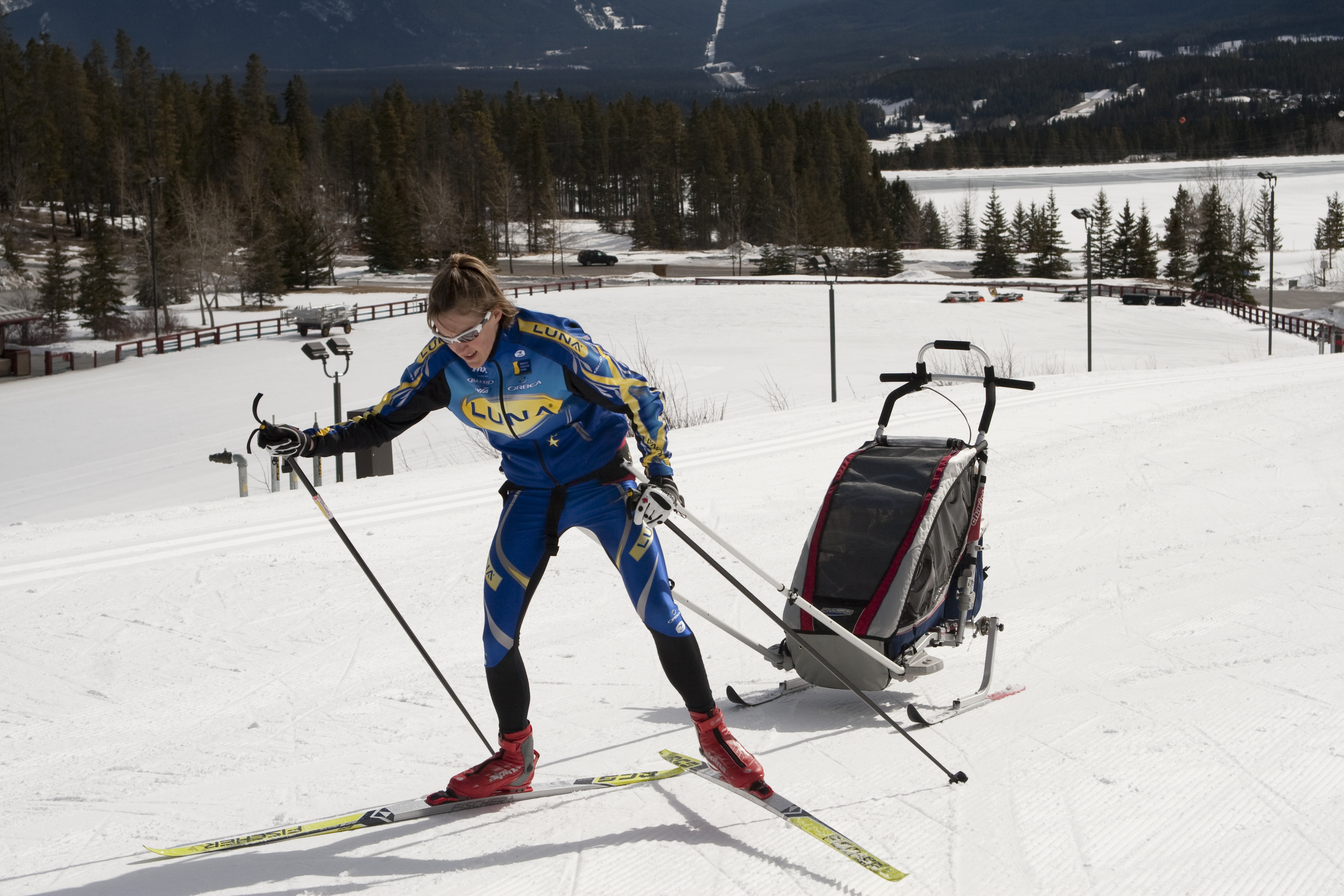
Skiing in Canmore with Zoe when she was 16 months old

7. Remind yourself of the few reasons indoor riding can be superior to outdoor riding. You can always periodically pump yourself up to ride the trainer with fun facts like it beats riding outside in 5 degree rain, its more bang for your time bucks, you can often push yourself harder than you might be able to outside by locking in the watts for intervals, and one-legged work, high cadence riding, and roller riding can improve your pedalling efficiency for when you hit the road again. It’s also not a bad time to remember the long-term perspective as to why you’re doing it in the first place, hopefully to prepare for a big event or some big races you have planned for next season! And of course it is our northerners secret to building mental toughness in the off-season!

8. Plan one (or two!) midwinter escapes to a warmer climate to train.  If you are able to, planning a welcome break to a warmer destination mid to late winter is always a great way to break up the indoor monotony and have a shorter term goal to work towards and look forward to enjoying the fruits of your indoor work. When I lived back east, a big group of us from Ontario would pile in our cars every year at the end of March, and drive down to South Carolina for a week of riding in Table Rock State Park. It was beautiful riding and great motivation to keep the winter riding up in order to be fit enough to handle the miles ridden that week. Now I enjoy occasional winter escapes with my kids to my hometown on Vancouver Island. And if you can’t escape winter, even a midwinter excursion to back country or xc ski for a few days can be just as refreshing!

9. If all else fails, ride outside anyway! If you’re lucky enough to have an old mountain bike that can potentially get covered in snow, slush, and salt, throw on some studded tires with extra low pressure, and on those slightly warmer winter days – called Chinooks in Calgary – take a spin on the bike paths on lightly covered single track trails and have fun practicing your balance. If you can ride where there is not too much ice, blasting down a snow-covered hill and trying to stay upright is a blast when falling into the snow won’t hurt one bit either!

Athlete-Mom Interview: Carrie Atwood

Carrie and I met through the LUNA team. As well as the Pro team, there are 26 Local Luna teams (run, cycling, mountain bike or triathlon focused) all over the United States (and yes, I’m hoping we can get some in Canada soon). You can read more about each local team on the Luna Chix website. Carrie is a member of the Team LUNA Chix Triathlon team in Seattle (which you can read more about below). She lives just outside of Seattle in Sammamish with her husband Eric, her 7 year old daughter Seamus, and 6 year old son, Sirus. I think I’ll need to go visit this area as it sounds like an Xterra triathlete’s dream training place – Carrie can run to work, there are 4 lakes within a few minutes drive, and 5hrs of mountain biking right out their doorstep, which are well maintained trails that have had over 100hrs of volunteer work done on them each year! Read on to hear about how Carrie’s modern family balances work, family, and play…

Carrie and son, Sirus

1. Can you tell me a little about your athletic/competitive background before becoming a mom?
I did my first road century when I was 15 but never raced or road bikes competitively. I was on the crew team my freshman year in college but was always sick and full of injuries, so I didn’t continue. After that I didn’t do much except the occasional rec league softball or soccer team. After some encouragement from an old boss, I decided to try mountain bike racing and was hooked. It’s how I met my husband! I raced a few years at the sport level, but when work became unbearable and racing was no longer fun, I stopped. It wasn’t until after I had my kids that I switched to triathlons and got my athletic groove back!

2. What has motivated you to keep setting athletic and/or competitive goals since becoming a mother? Is it different than pre-kids?
Pre-kids it was about trying to get in shape, having fun, hanging out with friends and meeting new people. I didn’t care about goals or winning or any of that. It really was just a way to pass the time and stay out of trouble. Since having kids, I am actually competitive for the first time in my life! I set goals and I want to exceed those goals. I am more focused all around and while I still do it to stay in shape, I hope I am also setting good examples for my kids.

Out for a beautiful NW training ride!

3. How do you balance training and/or racing with your family?
I try to get my workouts done in the morning so that when I come home in the evening I can concentrate on my family. If I do my work out in the evening, I spend that morning time with them, eating breakfast together and planning for the day. I also try to make sure I spend some one-on-one time with each of them every day, even if it is only a few minutes at bed time. There have been times when I have left the house before the kids wake up and gotten home after they are asleep. Sometimes I feel sad about not seeing them, and wonder if I am being selfish, especially when they hang on me asking me to please not go out for another bike ride. But I know I am a better mom because of my training and racing. I’m calmer, more patient and more confident. If the sadness gets too bad, which sometimes it does, I’ll skip a workout and spend extra time with them. I am also very lucky because I have a great husband who is also athletic so he understands. As a bonus, he is a stay at home dad and manages everything at home. It really allows me to spend my at home time with the family.

Racing as a LUNA Chix

4. Can you tell me more about how you made the decision to have Eric stay home and how that has worked for your family?
We joke that being a stay at home dad was one of the negotiating tactics I used in order to have a baby- I told him he’d have all kinds of time to train, etc. Ha! He was his fastest the year Seamus was born, but only this year with Seamus in 2nd grade and Sirus in Kindergarten does he consistently have a regular schedule. I want him to stay home at least another year, so Sirus will be in full day 1st grade, but really, I wouldn’t mind him staying home for much much longer. I like things the way they are. One of the other girls on our Seattle team has a stay at home dad, too. I swim with one and work with one, too. I don’t think it is for everyone, but it works for us. It was hard at first, I really had to let go, but he does a great job. Since the kids started going to school, I have learned to not mess with the morning routine at all, and its a bit weird at school functions because all the moms crowd around Eric and hardly acknowledge me, but whatever! He has also said it has been hard to crack the mom cliques too. Sometimes it’s sad because when the kids are sick or hurt, they tend to go to him first, and I get called Daddy a lot, but I think what they get from him is way worth it.

Eric and Seamus

5. Did you train during pregnancy?No. What was your approach? Lots of rest. 🙂 My first pregnancy I tried to stay sort of active but by the 5th month all I wanted to do was lay around and get huge. The 2nd pregnancy I didn’t even try to do anything because I got huge almost instantly.

6. Any advice you would give to other moms trying to stay active (or even competitive) while balancing kids?
For new moms, I’d suggest putting that baby in a BabyBjorn or some sort of carrier and walk all over the place. Hills and more hills! There is nothing wrong with sweating a little even, just don’t run. Babies love being in those carriers, they are content and will nap, and you’ll be able to ease into getting back in shape. We have a Chariot so to make family runs or bike rides more fun for the kids, we would stop at a park or two along the way. Now that my kids are older, I can go out to the garage on the weekends and spend a few hours on the trainer while they play in the house. And again I am lucky because I actually like the trainer and treadmill, so my advice would be to learn to love them. My husband and I have gym dates, where we swim or lift weights together while the kids are in the gym’s kids club (which luckily they love!), and most of my social activities with my friends are spent running or biking. This serves double duty: I’m getting in my girl time, I am getting in a workout, and an added bonus of that I’m not out spending my kid’s future college tuition on drinks or restaurant food. There is of course a time and a place for all of that, but if I can kill a few of those birds with one workout, then that leaves more time to be with my kids.

7. And of course can you tell me about the local Luna Triathlon team you’re are a member of? What are you favourite group workouts to do in and around Seattle? 
I am headed into my 5th season with Team LUNA Chix in Seattle and for 2012, I am going to be one of the team co-leaders! I love being part of Team LUNA Chix and meeting women who are interested in triathlon. One of my favorite things is hearing the stories from the newer ladies who are just beginning to realize what they can actually accomplish. Some of our most inspiring workouts are the mini-tris that we have a few times each summer. It gives the ladies a chance to swim, bike and run, practice transition and test their race strategy in a super short distance, low key, low pressure environment before their big day! I love the LUNA Chix and encourage all women interested in triathlons to check us out at our website and come to one of our workouts.

Team Luna Chix Tri Team in Seattle

Post-season blues or bliss?

Whether you’ve finished the one main event you’ve been training for, or several races as part of a season, it is completely normal to come down with a case of the post-race or post-season blues. If your “A” race is done, or the main event is over, no matter how well you did, there is a period of letdown. The event is finished, the race stories for the day are written, everyone has gone home and the party is over. You may feel as a child does, or you still do  :), after all the presents have been opened on Christmas morning. With the feelings of excitement, anticipation, planning and preparation for the big day suddenly dissipated, it is easy to feel temporarily lost.

Crossing the finish line for the last time in 2011

With my last race of season complete last weekend, I got thinking about what are the best ways to handle any feelings of post-race blues and make the beginning of the “off-season” as blissful as possible. Expecting and preparing for a bit of letdown time is half of the battle. Here is what has helped me enjoy and get the most out of this short period of re-balancing, renewing, and refocusing on what’s next….

1. I take some real time off training. I give myself permission to do absolutely NOTHING physical for at least a week to 10 days other than walks to the park with my kids and stretching. Usually, I get physical withdrawal symptoms earlier than that and feel like doing something. But I just wait until my body says, “I can’t stand this any longer, take me out the door for a little run at least!”

2. I indulge a little in all the forbidden foods I usually cut way down on when in serious training and racing mode. After a maximum of a few days of eating too much chocolate, chips, donuts etc the yuckiness I feel is enough to remind me why “everything in moderation” is the way to go and return to asap!

3. Before the off-season officially begins, I have a list of things I’m looking forward to doing, any projects I’ve had on the backburner all season. All those, “if I wasn’t training/racing so much, I’d take more time to….” Things like projects around the house that have been pushed down the priority list for several months as well as spending extra time with friends and family.

4. After some real time off, I start a fun “active rest” phase for about a month. When my body is itching to start moving agian, I do what feels good. I enjoy some “training” that might not be a regular part of my structured training routine, things like yoga, pilates, hiking, or fun social runs with no pacing/distance agenda. And I do enough so that the transition back to full on training again isn’t too painful.

5. Of course, part of the post-season blues are related to a sudden lack of goal focus. So it can be a fun time to take some time to plan out any events I’m going to compete in next season. I reflect on any races I’d love to do again, new ones to try, or ones I swear I won’t do again!

6. Once I’ve had a good body and mind break from sructured training and am feeling recharged, renewed and fully motivated to get back to work, it is time to sit down with my coach and get into the serious details of week by week training plans again. Of couse, I like to make sure this is well underway before the holiday season, so I can afford my beloved eggnog lattes and other occoasional goodies (in moderation of course) around Christmas!

ITU Long Course Worlds Race Report

I finished my triathlon season where I began it 7 months ago in April at the Xterra West Championship. With some good recovery and a minimal amount of training since Xterra Worlds two weeks ago I arrived at Lake Las Vegas feeling good, and miraculously having avoided the terrible colds that my kids had all week. Team Canada had organized a group swim in the lake on Thursday, and although the water was cool to get in, it felt fine once we got swimming.

However, on Friday, the afternoon before the race the temperature dropped and the skies opened up with heavy rain for several hours. The next morning I arrived in the twilight at transition about 45 minutes before the scheduled 7:00am race start time to learn that the 4km swim had been cancelled!! The reason was due to the combination of cool air temperature and cool water being deemed unsafe to race. While this was definitely in my favour against my strong competitors in the elite category, most of them top swimmers, I have to admit I still feel a little jipped that I did not get to experience a 4km swim as part of a race. That said I’m definitely not complaining that we were saved from starting the bike wet and possibly hypothermic! My body also feels beat up enough after racing 120km on the bike followed by a 30km run, definitely my biggest race/endurance challenge to date! I hope be able to walk again normally in a few more days, ha!

The swim start that was not to be!

With the swim cancelled (the lake and arches we would have started under pictured above), it was a time trial start with racers starting at 5 second intervals. With no swim, I was able to dress perfectly for the weather, and at least it was sunny with the eventual high around 16 degrees. I felt good on the bike right from the start. I had not ridden my Orbea Ordu time trial bike since the end of July at the Calgary 70.3 so I was glad the position felt so comfortable as soon as I got on it again just the day before the race.

The bike course consisted of two out and back loops on either side of Lake Mead (created by the famous Hoover Dam), a National Recreation Area. The winds weren’t too bad, the weather was clear, the pavement was generally super smooth, the desert and lake views were pretty scenic, and it was fun going fast! It was also neat to see approximately where I was behind the front cyclists at each turn around. I was going back and forth with Amanda Lovato, an American for much of the bike, and we entered T2 together in Henderson. The bike  consisted of non-stop climbing or descending, and by about the 100km mark my legs were feeling pretty punched on some steep bike path climbs. I was feeling ready to be done riding – I was also thinking about the fact that if I was doing an Ironman, I’d still have 60km to go – yikes!

Mom, the photographer catches my front end coming into T2, ha!

Entering T2 was awesome because we just dismounted and volunteers took our bikes. They also helped us grab our run gear back and get changed in the changing tent. Then it was off to do four laps of 7.5km run course.  I started the run in about 13th position. I felt great from the start and got into a pretty good rythmn, and tried to find a pace that felt fast but not too hard in order to pace myself. Not unlike the bike, the run had a few short sections that you might call “flat” but otherwise, it was a loop that was all uphill and then all the way back down. By the halfway mark in the run I’d moved into 10th position but by mile 13-14ish I started to wonder if I could get through it! I was well-hydrated so was mainly taking coke and gatorade from all the aid stations. With a few miles to go though I was actually feeling hungry and instinctively grabbed a cookie from a tray at the aid station dangling in front of me, maybe a bit of a risky move to eat while running! Although I found a second wind in the last few miles, a Polish girl recaught me, and I crossed the line in 11th, after getting through the 30km run in 2h15 minutes, and my total time for the day being 6h09!

My dad giving me some splits on the run

Rachel Joyce and Leanda Cave of Great Britain came 1st and 2nd, and Meredith Kessler from the USA was third to complete the podium. As far as the other Canadian women in the Elite race, Tenille Hoogland had a great day, finishing 7th, and Margaret Bailey was 15th. As a result, we came second as a nation, (a team category I didn’t know about until they announced it at the post-race dinner) behind the U.S.

Running for Canada!

Although I was a little nervous about following all the ITU rules I had learned about at the elite race meeting, on race day the organization was super impressive. It was fun to represent Canada for the first time in a race as well. I was told there were about 150 Canadians and I could see them everywhere on the course and there were tons of spectators cheering for Canada too – maybe our red and white race kits stood out more as well!

Enjoying post-race buffet of Krispy Kreme donuts, chips, and pop with the kids

Thanks to my parents, who were able to join me and the kiddies for another “race-cation” with JF unavailable to come. We are spending a few days checking out the Vegas area and avoiding the Canadian winter just a little longer before heading home. Then I will finally enjoy the start of the off-season. My “active rest” will consist of packing up the house to move on December 1st! (We are moving into a rental house for about 8 months while we renovate a bungalow we bought in the Calgary community of Montgomery – should be a busy winter!)

Thanks to everyone who has supported me for a very fun, and productive 2011 season of racing. I especially could not do it without the support of the LUNA Pro Team, my husband, my parents, and my Coach, Cal!!

Xterra World Championship Race Report

Awwww, Maui! Even though every year is a majorly important “race-cation” for me, I couldn’t help but stay pretty relaxed leading up to the race with a condo on the water with a lanai view like this…..

View from our Kahana condo with amazing sunsets every night!Steps away from the beach of the Lanai, take your pick!

And my two cutie pies having so much fun with my parents and husband along to help out….

Zoe and Nico enjoy their new inflatables in the pool with Grandma

With all the anticipation and hype surrounding the the new Xterra Worlds venue in Kapalua in West Maui, I was pleasantly surprised and downright excited for the race on Sunday by the time I had seen the whole course and race morning arrived. Many had said it was a good course for me and I was in full agreement! Well, the big day has come and gone, and even though I made the podium in 5th position, which was satisfying, overall I have to admit I am a little disappointed and expected more of myself. Here is how my race day story unfolded….

As I’ve heard many say in the world of triathlon, you can’t win the race in the swim, but you can lose the race in the swim, or at least I would agree you can put yourself out of contention in the swim. For me, the swim is the crazy, unpredictable part. You can be going great in a pool, but an open water swim with 670 some other people in slightly rough, ocean water with a strong current can be a tough one to navigate. I started the race in the middle of the line up on the beach, and got off to a pretty smooth start. As we neared the first buoy the chaos thickened, and I was punched in the head several times by some guy as I was working on my swim agressiveness and trying to herd him left in order to make the buoy. The current was pushing the whole pack too far left of the buoy so I arrived right in the middle of the angry lady on the surf board (ha!) yelling at everyone to get around the buoy. I obediently treaded water around the buoy trying to keep my head above water, while many others did not make it around and chose to or were forced to cut inside. Maybe there is a better way? Pontoon buoys? Maybe not making all the amateur racers wear swim caps the same color as the buoys could be a start to help sighting too? Anyway, after that crazy slow up at the first buoy I was swimming clear and managed to swim a straighter line back to the beach for the short sand run before lap number two. In the end I came out of the water at least two minutes slower than I would have liked and 5 minutes down on the top Pro women contenders – ouch! I would love it if the Pros could have a fairer and separate start like we did at the US Champs – but enough of my swim rant!

The masses are off, many drifting way too far left of the first buoy!

Off onto the bike, I had some passing to do! After patiently riding out a few bottle necks in the first few miles of twisty single track, and a quick stop to yank my seat back into place after the nose jacked up when I sat down too hard over a bump (whew!), I found my rythmn. The climbs were tough but all rideable, there were bits of fun twisty single track, shaded “jungle-like” sections, fast downhills spattered with small rock drops, grassy humps, red dust bowls, and smooth, super highway speed sections, nothing super technical by mountain bike standards but a good variety of everything, and just plain tough! All I did the whole ride was pass people and try and keep my lightweight self on fast wheels on the downhills. J-F gave me a split with 5 miles to go and I was disappointed to hear I was only in 9th at that point. I gave it all I could to T2, and luckily had a solid day on the bike with the 3rd fastest bike split of the day.

Coming in to transition at the end of the bike

I headed onto the run in 8th position just behind Erin Densham, a 2008 Triathlon Olympian from Australia. I thought great, she’s gotta be a fast runner so we can work together. And we did for the first mile or so going back and forth up the long uphill on the paved golf path but unfortunately once we hit the dirt she fell behind and I never saw her again. The run climbs were brutal and hot with only slight reprieves on soft grass, and dirt with plenty of fun non-stop cornering through tall shrubbery and trees. Up ahead I could see Carina Wasle of Austria, and eventually caught her before the top of the climbing. Once the long downhill sections started just before mile 4 I was having some difficulties really letting it go as I was getting a bit bonky and uncoordinated. With no one in sight, J-F (who was all over the course, bless his dehydrated self that day!), yelled at me to keep me running up the last VERY steep pavement climb before hitting the long single track descent back down to the beach. After making it across the rocky river bed and short beach section, I pushed up the last, long and grassy climb to the finish. I had to squeeze around the medic team hovered over a collapsed Melanie McQuaid about 300m from the finish. Unfortunately for Mel she came close to pacing her 110% effort perfectly to take the win but was overtaken by a system malfunction before she made it there.

The painfully slow, sandy, and HOT run across the beach!

With one past World Champion down for the count, and another two past champs out with injuries (my Luna teammate Shonny, last years champ out with an ACL tear and 3X World Champ Julie Dibens out with a foot injury), the 2011 title was wide open for a new winner, and my hat is off to the speedy Scot, Lesley Paterson for her amazing day and win. With a great day in all three disciplines, she charged to the finish with a smoking fast run that even outsplit the men’s champion of the day, Micheal Weiss!!

Womens podium – myself (5th), Marion Lorblanchet (2nd), Lesley Paterson (1st), Helena Erbenova (3rd), Renata Bucher (4th)

The same podium all cleaned up for the Awards banquet

All in all, as much as it was a sufferfest, it was motivating and I think I can even still say, fun to race a new Worlds course. With what I feel was a sub-par day I feel motivated to go back and give this same course another go a year from now! Thanks to my family for their support at this race as well as the LUNA team, and our team mechanic, Chris who was there to have my Orbea Alma 29er in perfect working condition. He also raced and bravely overcame a panicky swim to finish his day in the top half of his extremely competitive age category!

Congrats to everyone I know who put up great battles on this new, extremely challenging course! Many Canadians rocked it out there with lots of podiums – congrats to my Coach Cal who took the 40-44 World title AND to fellow Canadian and mom, Brandi Heisterman, who came an impressive 9th in the Pro women in her second ever Xterra and you can check out here story too on her blog!

Also get a look at the course by checking out a great 10 minute recap video of the race here.

And full results can be found here.

Now its no rest for the weary and jetlagged. I’m back in Calgary and have two weeks to recover and try and maintain some fumes of fitness for ITU Long Course Worlds in Las Vegas on November 5th….hmmmm, what will it be like to pin it for a 4k swim, 120km bike, and 30km run all in one day? Stay tuned for the final race report of 2011 still to come….

What to THINK so races go by in a BLINK!

It was early June in Buffalo, New York during the 1500m heats at the 1998 NCAA Division 1 Outdoor Track and Field Championships. As I ran I heard my 800m split time – 2:10 – only 2 seconds slower than my best 800m race time that season but I didn’t care. I just went with it and was feeling great. Then we were through the bell lap, around the bend and with 300m to go, usually too early to start kicking I couldn’t hold back any longer. My legs were begging to unleash another gear and I started a long kick towards the finish. The entire closely matched pack seemed to surge towards the finish together and it was a photo finish between five of us. It was the most effortless 4 minutes and 18 seconds I had ever run.

I recently finished a popular and well-known book in my to-read list called Blink by Malcom Gladwell. His well researched stories site examples of “thin slicing”, snap judgments, listening with your heart, and following your intuition in contrast to deliberate, fully thought out decision making. It got me thinking about how peak performance in sport is related to the ability to just trust what was termed in the book as our, “adaptive unconscious.” On race day, the work is done, the pre-race thinking and strategizing should be mostly decided. It is time to trust all the hard work, the training, the “studying” you’ve done and trust your experience to take you through each moment. When we can tune into that zone where we let our adaptive unconscious guide us, we make decisions before we’re even conscious of why we’re doing them.

So when is it important to really think about what you’re doing in sport? And when is it important to just go, keep things as simple as a blink, just trust your feeling?

I was observing the short track speed skaters in Calgary the other day as they were focused on praticing starts, which are particularly important for the 500m distance they race. They had instant video feedback on top of coach and teammate suggestions for how to tweak things. It was a practice they could break down their body position and try different things. A time to really THINK about what they were doing. Of course, come race day, it will not be the time to be adjusting race start position, it will be the time to just “put it all together” and GO when the gun goes off.

Achieving peak performance more consistently in sport is much like becoming an expert on yourself and your sport. To know yourself and your sport well enough to be able to make decisions in a blink during performance means doing much of the thinking beforehand. Thinking beforehand means preparing yourself mentally and physically for race-like conditions in training, methodically experimenting with technique, equipment set up, and pacing while training. At a race it means getting to know the venue, having a plan A, B, C etc for race day, being prepared for ANYTHING and ANYONE! Unfortunately, potential great performances sometimes get interrupted by unexpected scenarios or conditions that cause over thinking and overanalyzing, instead of just quickly refocusing, and maybe even resetting the goal for the day with the most positive focus possible.

Focusing on a few key, simple things on race day can get you in the zone to get your best effort in, AND be over the finish line in what CAN feel like a blink! When I think back to my 1500m race at the very end of my track running career for the University of Washington Huskies described above, it was after 12 years of running and racing on the track. Peak performances like that didn’t happen every day but with enough practice and experience – I’m guessing I’d run at least 100 1500m races to date at that point – it was the perfect opportunity against optimal competition to run a personal best. With the right preparation I was able to focus on many of the ingredients that characterize a peak performance -confidence, optimally relaxed and calm yet focused and alert, positive, looking forward to the competitive challenge, ready to trust my instincts in the moment, and perhaps most importantly – ready to have some FUN!!

One of the few times an Xterra run has felt almost effortless, the 2008 World Championships